Showing posts with label game. Show all posts

Wednesday, November 2, 2011

Galaxy Game, The First Coin-Operated Game


"Spacewar," created by three MIT students in 1961, had great success amongst the engineering students.  However in the 1960's computers were very expensive; thus not allowing enthusiasts to freely work on the creation of games.  Only universities and the wealthy were able to afford computers at that time.  The situation changed however, in 1970 with the launch of the minicomputer PDP-11 by DEC.  Its price was about $14000, which means that computers became available for purchase by a wider range of consumers.  Bill Pitts and Hugh Tuck did not fail to seize this opportunity.

Pitts and Tuck had an idea in which they would create a game that required money to play.  Meaning that they are the founders of the video arcade game concept. They wanted to create the analog version of "Spacewar" for a wider audience.  Their work resulted in the creation of "Galaxy Game."

"Galaxy Game" was installed in a cafeteria at Stanford.  To play this game, you had to insert coins, one game cost 10 cents.  If player inserted a quarter however, he could play three times.  Thus, the "Galaxy Game," became the first coin-operated game.

Friday, October 21, 2011

Spacewar – First Shooting Game


The first shooting game was created by three students from MIT on a DEC PDP-1 mini-computer in 1961.  Those students included Martin Graetz, Stephen Russell, and Wayne Wiitanen.  The game was called "Spacewar."  This early game was not a video game, because it did not use a video display, the PDP-1 computer used a vector display system.

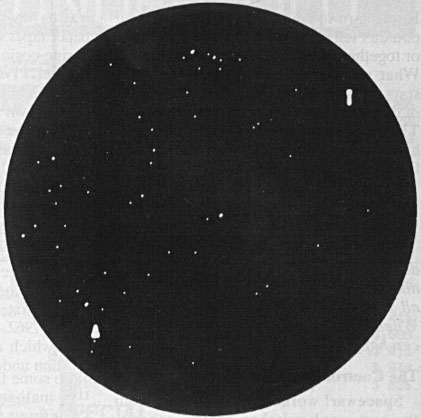
Spacewar consisted of two spaceships which shot at each other.  To bring some sense of reality to the game, the students made a special background which simulated a real constellation.  The students also wanted to add some complexity to Spacewar, so they added a new element to the game, the gravity star; which attracts the spaceship(s.)  This star is usually called sun.

Later, Stephen Russell admitted that the best thing about Spacewar was that the game has set an example for numerous arcade game developers of future, this early game inspired them in the creation of their own games.

The interesting thing is that the game of Martin Graetz, Stephen Russell, and Wayne Wiitanen was used as a test on new PDP-1 systems, because there was not any other program which allowed DEC technicians to do a complete check of all aspects of the system except Spacewar.

Monday, September 19, 2011

Noughts And Crosses – First Real Graphical Computer Game


The first real graphical computer game was released in 1952 by Alexander S. Douglas, and is called "Noughts And Crosses" (or OXO.)  Douglas wrote it on EDSAC for his dissertation.

EDSAC is the first computer, which was built at the University of Cambridge, United Kingdom, in 1949.  EDSAC had a 35x16 pixels display.  The idea of Alexander S. Douglas was to use the display, to display his game.

Douglas was writing a PhD dissertation about Human-Computer interaction, he programmed "Noughts And Crosses," a Tic-Tac-Toe game, to show this interaction.  The opponent of a player in "Noughts and Crosses," was the machine. The player used a mechanical telephone dialer to place the nought or cross wherever he/she chose.  This dissertation is still stored in the library of the University of Cambridge.

You may wonder why, if "Noughts And Crosses" was the first real graphical computer game, why didn’t it spread worldwide?  This in fact, was not possible.  There was no other computer similar to EDSAC in the world (it was unique.)  So, if somebody wanted to play "Noughts And Crosses," they had to go to the University of Cambridge.

Wednesday, August 10, 2011

Arcade Games in 20th Century: Part 2 - Evolution of Arcades

The appearance of arcades took place during the interwar period.  That was the time when the coin operated machines were developed.  However, not everyone was able to use arcade games; the person had to be in a certain age range.  In addition, only certain categories of people were allowed to use arcade games.

Then the video game technologies started to improve arcades with electronic features.  This led to the improvement of automatic gaming tools.  Modifications in there structure resulted in the simplification and enrichment of game play.

After some more time had passed, modifications have been moved from external area of arcade games to internal, the games themselves started to be improved.  This improvement led to more realistic imitations in games.

In the late 1970s-1980s, arcade games became an industrial environment based on electronic work.  This period of time is also known as the golden age of video arcade games.

Friday, May 20, 2011

Present Situation of Video Arcade Games: Part 1

Video arcade games have a great history, in the 1980s they were very popular. They even created popular video game cultures, so to speak, and cultural icons. What is the present situation of video arcade games? Did the arcades become extinct? No, of course they didn’t. It is true that the time of arcades has passed, but the video arcade game industry does still exist today. Just on a significantly reduced level.

In order to facilitate porting a video arcade game to a home system, the modern video arcade game hardware is often based on home game consoles. Some home consoles have the video arcade versions:

PlayStation 2 – System 246

Microsoft Xbox – Chihiro

Dreamcast – NAOMI, Atomiswave

Nintendo GameCube – Triforce

The survival of some video arcade games is caused by their expanding into ticket-based prize redemption. Others have survived by expanding into more physical games which haven’t equivalents among home game consoles. Some examples of the latter would be skee-ball and whack-a-mole.

Thursday, May 5, 2011

End of Golden Age of Video Arcade Games: Copies of Popular Games

During the late 1970's technology made it possible to create video games with much better quality graphics and sound in comparison to previous years. It was still  a very far cry from what future technologies would have to offer, with realistic images and full motion video. This is why arcade game developers had to compensate for the lack of quality, by making the game play even more fun or entertaining. Many consider the late 1970's the golden age of the video arcade games. A lot of wonderful video arcade games were created then.

Unfortunately, this wonderful time didn’t last to terribly long, arcade games continued to be popular till the beginning of 1990's, but then there time had passed.  So, what happened, there are several reasons for it, and one of them is that the arcade market started to be filled with the numerous copies of these popular arcade games. These copies killed the interest to video arcade games, the development of something new became a rarity. Even though there were still new genres being explored by arcade game developers, the overwhelming majority of created games were maze type games, shooting games, and other such variations of these well-known themes.

Thursday, March 24, 2011

World of Pac-Man


The world of Pac-Man is pretty simple, but its gameplay is very exciting. The “hero” of this video arcade game is yellow creature in the form of circle, which is called Pac-Man. The game area represents a maze. There are also other creatures which patrols the area.

The goal of the game is to eat dots which are placed all over the maze. Other creatures are the enemies which pursuit a gamer and which should be avoided.

No one can tell for sure what the game creatures represented. The “hero” represents a mouth or something like this. The enemies are sometimes referred to as ghosts, monsters or goblins.

This video arcade game gained a huge popularity. It is impossible to describe all the excitement of playing this wonderful arcade game. It isn’t surprising that it became a legend. Even now, more than thirty years after the release of Pac-Man, it is still popular and is still played by a lot of fans and ordinary gamers.

Saturday, March 12, 2011

Experiments of Arcade Game Developers

At the end of 70-ies – 80-ies arcade game developers were experimenting with new hardware. For example, they were creating video arcade games with non-video technology such as vector displays. Vector displays, unlike the raster displays, produced crisp lines.

Some of these arcade games gained a big popularity. Among them are created by Atari in 1980 Battlezone and Tempest and 1983’s Star Wars, also from Atari.

But vector technology fell out of favor with arcade game companies. This happened because the vector displays are very expensive in repairing.

In order to provide games with movie-quality animation, arcade game developers were also experimented with laserdisc players. The very first video arcade game that used this technology is Dragon's Lair. It was released in 1983. The whole process of creation of this game took three years.

The release of Dragon's Lair was true sensation. But, in result, the popularity of the genre was dwindled. The reasons for this were the following:

  • these arcade games were fairly linear;
  • they depended less on reflexes than on memorizing sequences of moves.